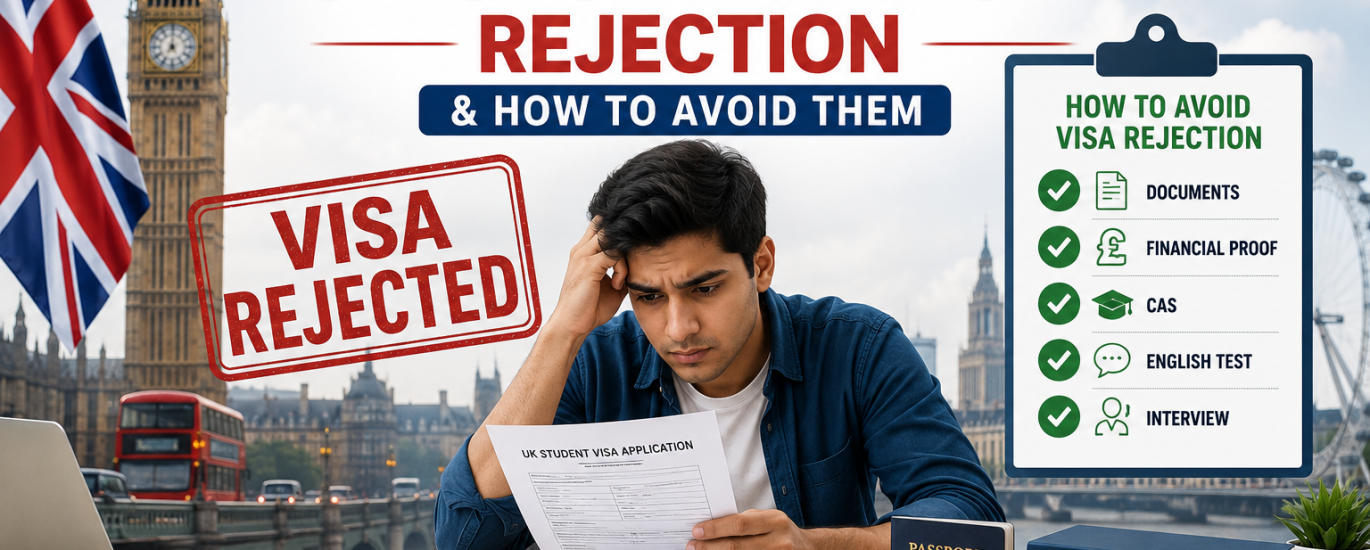
Discover the most common reasons UK student visa applications are rejected and learn practical tips
Studying in the UK is a dream for thousands of international students every year. However, receiving an offer from a university is only one step of the journey. Your UK Student Visa application must also be approved by UK Visas and Immigration (UKVI). Even small mistakes in your application can result in a visa refusal, causing delays, financial loss, and disappointment.
The good news is that most UK student visa rejections are avoidable. By understanding the common reasons for refusal and preparing your application carefully, you can significantly improve your chances of success.
In this guide, we’ll explain why UK student visas are rejected and how you can avoid these mistakes.
1. Incomplete or Incorrect Documentation
One of the most common reasons for visa refusal is submitting incomplete or inaccurate documents.
Examples include:
- Missing financial documents
- Expired passport
- Incorrect academic certificates
- Missing translations
- Incorrect CAS information
How to Avoid It
- Double-check every required document.
- Follow the UKVI document checklist carefully.
- Ensure all documents are valid and up to date.
- Use certified translations if documents are not in English.
2. Insufficient Financial Evidence
UKVI requires students to prove they have enough funds to cover tuition fees and living expenses.
Your application may be rejected if:
- Your bank balance is too low.
- Funds were not maintained for the required period.
- Bank statements do not meet UKVI standards.
- Financial sponsor documents are incomplete.
How to Avoid It
- Keep the required funds in your account for the required number of days before applying.
- Use acceptable financial documents.
- Ensure your statements clearly show your name, account number, and balance.
- Verify the latest UKVI financial requirements before applying.
3. Problems with the Confirmation of Acceptance for Studies (CAS)
Your CAS is one of the most important documents in your visa application.
A visa may be refused if:
- CAS details do not match your application.
- CAS has expired.
- Personal information is incorrect.
- Course information is inaccurate.
How to Avoid It
Review your CAS carefully before submitting your application. Contact your university immediately if you notice any errors.
4. Failure to Meet English Language Requirements
Most students must demonstrate English language proficiency through approved tests unless exempt.
Your visa could be refused if:
- You submit an invalid test result.
- Your score doesn’t meet university or visa requirements.
- Your test provider isn’t accepted.
How to Avoid It
- Take an approved English language test.
- Ensure your scores meet the required level.
- Check that your certificate remains valid.
5. Providing False or Misleading Information
Submitting false documents or inaccurate information can lead to immediate refusal and may result in a future ban from applying.
Examples include:
- Fake bank statements
- Altered academic certificates
- Incorrect employment information
- False financial sponsorship
How to Avoid It
Always provide genuine and verifiable documents. Never submit information you cannot support with evidence.
6. Poor Interview Performance
Some applicants may be invited to attend a credibility interview.
Visa officers assess whether you are a genuine student by asking questions about:
- Your chosen course
- University
- Future career plans
- Financial arrangements
- Why you chose the UK
How to Avoid It
Prepare honestly and confidently. Understand your course, university, and career goals before attending the interview.
7. Weak Immigration History
A previous visa refusal doesn’t automatically mean your UK Student Visa will be rejected, but UKVI carefully reviews your immigration history.
Issues include:
- Previous visa refusals
- Overstaying visas
- Immigration violations
- Providing false information in previous applications
How to Avoid It
Declare previous refusals honestly and explain them clearly if required.

I found this blog incredibly helpful while researching universities in London. It clearly explains everything from choosing the right university to understanding tuition fees, scholarships, student visas, and living costs. The information is easy to understand and gave me a clear idea of what to expect before applying
Ahmed Rahman
8. Incorrect Application Form
Many applicants accidentally enter incorrect information.
Common mistakes include:
- Wrong passport number
- Incorrect travel history
- Misspelled names
- Incorrect education details
How to Avoid It
Review your application several times before submitting it. Ask a professional consultant like future way consultancy the best uk student visa support agency to check your form if you’re unsure.
9. Failure to Meet Genuine Student Requirements
UKVI wants to ensure applicants genuinely intend to study in the UK.
Applicants may be refused if they cannot clearly explain:
- Why they chose their course
- Why they selected the university
- How the course supports their career
- Their future plans after graduation
How to Avoid It
Be prepared to explain your academic background, career goals, and reasons for studying in the UK.
10. Applying Too Late
Submitting your application at the last minute increases the risk of missing deadlines or not having enough time to provide additional documents.
How to Avoid It
Apply as early as possible after receiving your CAS. Early applications allow time to fix any issues if UKVI requests further information.
Tips to Increase Your UK Student Visa Approval Chances
Follow these best practices to maximise your chances of success:
- Carefully read all UKVI requirements.
- Submit complete and accurate documents.
- Maintain the required financial funds.
- Review your application before submission.
- Use genuine supporting documents.
- Prepare well for your credibility interview.
- Apply early.
- Seek professional guidance if needed.
Frequently Asked Questions
Can I apply again if my UK student visa is rejected?
Yes. You can submit a new application after addressing the reason for the refusal. Make sure you correct any mistakes and provide any missing documents.
Does a visa refusal affect future applications?
A previous refusal does not automatically prevent future approval. However, you should disclose previous refusals honestly and ensure your new application addresses the issues raised.
How long does UK student visa processing take?
Processing times vary depending on your location and the time of year. It is advisable to apply well before your course start date.
Can incorrect financial documents cause rejection?
Yes. Financial evidence is one of the most common reasons for UK student visa refusal. Ensure your documents fully meet UKVI requirements.
Final Thoughts
A UK Student Visa rejection can be frustrating, but most refusals happen because of preventable mistakes. By carefully preparing your documents, meeting financial requirements, providing honest information, and understanding UKVI expectations, you can greatly improve your chances of receiving your visa.
If you’re unsure about any part of the application process, seeking professional guidance can help you avoid costly errors and start your UK education journey with confidence.