Real Guidance. Real Support. A Successful Study Abroad Journey.
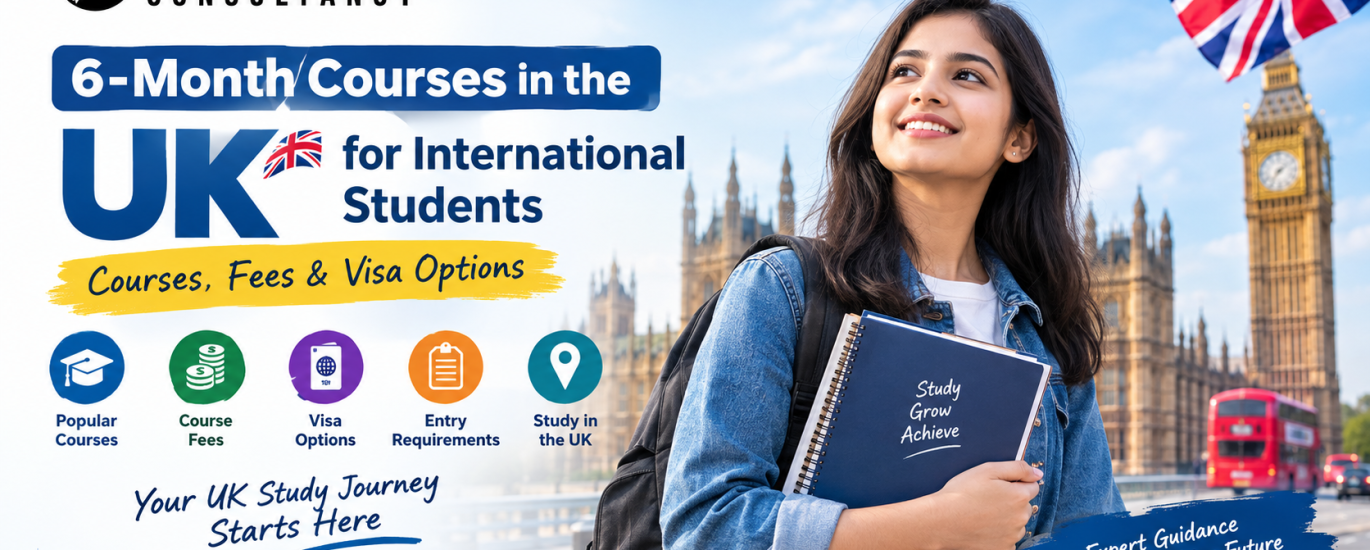
Short courses in the UK can be a practical option for international students who want to develop specific skills, gain academic experience, or explore a subject without committing to a full undergraduate or postgraduate degree.
A 6-month course in the UK may be available in areas such as business, digital marketing, computing, healthcare-related subjects, hospitality, English language, and professional development. However, course length alone does not determine whether a student can obtain a UK visa. The appropriate immigration route depends on the course, institution, duration, and the student’s circumstances.
If you are planning to study in the UK, Futureway Consultancy can help you understand suitable course options, admission requirements, documentation, and the relevant visa route.
What Are 6-Month Courses in the UK?
A 6-month course is a short-term study programme that generally takes around six months to complete. These programmes can include professional courses, certificates, diplomas, English language programmes, pathway-related study, and other specialist training.
The exact duration and qualification vary by institution. Some programmes may be designed for students who want to gain practical knowledge, while others can support professional development or preparation for further study.
Before choosing a course, international students should check:
- Course duration
- Qualification awarded
- Accreditation or recognition
- Institution’s eligibility to sponsor international students, where applicable
- Tuition fees
- Entry requirements
- English language requirements
- Available visa route
- Whether the course supports progression to further study
Why Choose a 6-Month Course in the UK?
A shorter programme can be attractive for students who want focused education without undertaking a multi-year degree.
1. Develop specialised skills
Many short courses focus on a particular subject rather than covering a broad academic curriculum. This can be useful if your goal is to strengthen a specific professional skill.
2. Gain international study experience
Studying in the UK can provide exposure to an international academic environment, different teaching methods, and multicultural communities.
3. Prepare for further education
Some students use shorter programmes to improve their academic knowledge or prepare for a future degree, although progression depends on the institution and course requirements.
4. Improve professional knowledge
Courses in areas such as business, digital marketing, computing, project management, and other professional fields may help students develop job-related knowledge.
5. Study for a shorter period
For students who do not want to commit immediately to a one- or two-year programme, a six-month course can offer a more limited study period.
Popular 6-Month Courses in the UK for International Students
The availability of six-month programmes varies between universities, colleges, and training providers. Popular subject areas can include:
Business and Management
Business-related short courses may cover:
- Business management
- Entrepreneurship
- Leadership
- Project management
- Business strategy
- International business
Digital Marketing
Digital marketing courses may cover areas such as:
- Search engine optimisation (SEO)
- Social media marketing
- Content marketing
- Email marketing
- Paid advertising
- Analytics
- Digital strategy
Computing and IT
Depending on the provider, short programmes may focus on:
- Web development
- Software development
- Data analytics
- Cybersecurity
- Cloud computing
- Information technology
Students should carefully review the syllabus because course titles and academic levels can differ between institutions.
English Language Courses
The UK has a wide range of English language programmes for international learners. Some courses focus on general English, while others may concentrate on academic English, examination preparation, or professional communication.
Hospitality and Tourism
Short courses related to hospitality and tourism may cover:
- Hotel management
- Hospitality operations
- Tourism management
- Customer service
- Event management
Professional Development Courses
Students and working professionals may also find short programmes in areas such as:
- Human resources
- Finance
- Accounting
- Project management
- Healthcare management
- Business communication
The exact availability depends on the institution and intake.
How Much Do 6-Month Courses in the UK Cost?
The cost of a six-month course varies significantly depending on the subject, institution, qualification, location, and course type.
Students should consider two major costs:
- Tuition fees
The institution charges tuition according to the specific programme. - Living expenses
Students may need to budget for accommodation, food, transportation, utilities, study materials, and other daily expenses.
Study in London and other major UK cities can have different living costs from smaller cities and towns.
Therefore, instead of choosing a course based only on tuition fees, international students should calculate the total expected study cost.
Typical expenses to consider
- Tuition fees
- Accommodation
- Food and groceries
- Local transportation
- Books and study materials
- Mobile and internet costs
- Health-related or insurance costs where applicable
- Visa and immigration-related fees
- Personal expenses
Important: Fees change by institution and intake. Students should confirm the latest tuition fee directly with the education provider before making a financial commitment.

Futureway Consultancy made my UK study journey much easier. They helped me choose the right course, guided me through the university application process, and answered my questions whenever I needed support. I really appreciate their professional and friendly guidance. Highly recommended for students planning to study in the UK
Arman Mallik (uk)
What Are the Entry Requirements for a 6-Month UK Course?
Entry requirements depend on the course and institution.
Common requirements may include:
- Valid passport
- Previous academic certificates
- Academic transcripts
- English language evidence where required
- Personal statement or study plan for some programmes
- CV for professional courses
- References where applicable
- Proof of financial ability where required for the relevant visa
- Other documents requested by the institution
Some courses may have specific academic prerequisites or work experience requirements.
For example, an advanced business or computing programme may require previous study in a related field, while an English language course may have different entry requirements.
Do International Students Need a UK Visa for a 6-Month Course?
Not necessarily. The appropriate UK immigration route depends on the course and the student’s circumstances.
For eligible study of up to six months, the Standard Visitor route may allow certain types of study at an accredited institution. However, visitor rules include restrictions, and students should check whether their specific course is permitted.
A Short-term study visa may apply to certain English language courses lasting more than six months and up to the permitted maximum period.
For longer eligible academic programmes, the Student visa may be the relevant route, but a course being six months long does not automatically mean a student qualifies for a Student visa.
Because immigration requirements can change, students should check the latest rules on the official UK government website before applying.
Can I Work in the UK While Studying a 6-Month Course?
This depends on the immigration route and the conditions attached to the student’s permission to enter or stay in the UK.
International students should not assume that every six-month course allows them to work.
For example, visitor permission generally does not provide the same work rights associated with some other immigration routes.
Before enrolling, check:
- Which visa or immigration permission applies?
- Is employment permitted under that route?
- Are there restrictions on the type or amount of work?
- Does the institution provide appropriate immigration guidance?
Choosing a course based on an expectation of being able to work can create serious problems if the relevant immigration route does not permit employment.
Can a 6-Month Course Lead to a Longer UK Study Programme?
Sometimes, but it depends on the course and institution.
A short course may help a student explore a subject before applying for another programme. However, a six-month course does not automatically provide a pathway to a degree or another UK visa.
Students should ask the institution about:
- Progression opportunities
- Academic credit
- Recognition of the qualification
- Entry requirements for the next programme
- Whether a new visa application would be required
- Whether they can apply from inside or outside the UK under the relevant rules
Are 6-Month Courses in the UK Suitable for Students from Bangladesh?
Yes, eligible UK courses can be considered by students from Bangladesh, but suitability depends on the student’s academic background, career goals, finances, English proficiency, and immigration circumstances.
For Bangladeshi students, it is particularly important to understand the complete cost of studying in the UK, not just the advertised tuition fee.
Before applying, compare:
- Course fees
- City and accommodation costs
- Course duration
- Institution
- Qualification
- Entry requirements
- English language requirements
- Visa eligibility
- Future study plans
A course that appears inexpensive may not necessarily be the most suitable option once accommodation and other expenses are included.
How to Choose the Right 6-Month Course in the UK
Choosing a course should start with your academic and career objective rather than simply searching for the shortest or cheapest programme.
Step 1: Define your goal
Ask yourself whether you want to:
- Develop a professional skill
- Improve English
- Change career direction
- Gain subject knowledge
- Prepare for further education
- Gain international academic experience
Step 2: Research recognised institutions
Check the institution, course structure, qualification, accreditation, and available student support.
Step 3: Compare total costs
Look beyond tuition fees and calculate accommodation, food, transportation, visa-related costs, and other expenses.
Step 4: Check visa eligibility
Never assume that a six-month course automatically qualifies for a particular UK visa. Verify the current immigration requirements for your exact programme.
Step 5: Check progression opportunities
If you plan to study a degree or postgraduate programme later, ask whether the course provides any recognised academic progression.
Step 6: Prepare your documents
Start preparing academic documents, passport, English-language evidence, financial documents, and other required paperwork early.
6-Month Course vs 1-Year Course in the UK
The right choice depends on your objective.
Factor | 6-Month Course | 1-Year Course |
Study duration | Around 6 months | Around 12 months |
Commitment | Shorter | Longer |
Total tuition cost | May be lower overall | Usually higher overall |
Living costs | Shorter period | Longer period |
Subject depth | Often focused | Generally more extensive |
Progression | Depends on programme | May offer more progression options |
Visa route | Depends on course | Depends on course |
A six-month course may suit someone seeking focused education, while a longer programme may be more appropriate for students seeking a full academic qualification.
Application Process for 6-Month Courses in the UK
The application process varies by institution, but generally follows these stages:
- Choose a course
Research suitable subjects, institutions, fees, duration, and entry requirements. - Check eligibility
Confirm academic and English language requirements. - Prepare documents
Collect your passport, certificates, transcripts, English-language evidence, CV or personal statement where required, and financial documentation. - Submit your application
Apply through the institution’s application system or an authorised representative. - Receive an offer
If accepted, you may receive a conditional or unconditional offer. - Meet conditions
Provide any outstanding documents or satisfy academic or language conditions. - Arrange your immigration permission
Choose the appropriate visa or immigration route based on your exact course and circumstances. - Prepare for arrival
Arrange accommodation, travel, finances, and other practical requirements.
Why Choose Futureway Consultancy?
Choosing the right UK course involves more than finding a programme with a short duration.
Futureway Consultancy helps students understand their UK study options and prepare for the application process.
Our guidance can include:
- UK university and course selection
- Course and entry requirement guidance
- Application support
- Document preparation guidance
- Personal statement support
- Visa application guidance
- Pre-departure guidance
- Study pathway planning
We help students evaluate their options based on their academic background, career goals, budget, and preferred study destination.
Frequently Asked Questions
What are the best 6-month courses in the UK for international students?
Popular areas include business, digital marketing, computing, English language, hospitality, tourism, and professional development. The most suitable course depends on your previous education and career goals.
Can international students study a 6-month course in the UK?
Yes, international students can study eligible short courses in the UK, but the applicable immigration route depends on the course, institution, duration, and individual circumstances.
How much does a 6-month course cost in the UK?
There is no single fixed price. Tuition varies by institution and subject, while total costs also include accommodation, food, transportation, and other living expenses.
Can I work while studying a 6-month course in the UK?
Work rights depend on the immigration permission you hold. Some short-term study routes have restrictions, so students should check the conditions of their specific route before planning to work.
Can I get a UK Student visa for a 6-month course?
Not every six-month course qualifies for a Student visa. Eligibility depends on the course and sponsoring institution, so students should verify the current Student visa requirements before applying.
Which UK visa is suitable for a 6-month course?
The appropriate route depends on the course and circumstances. Some eligible short study programmes may fall under the Standard Visitor route, while certain English language courses may qualify for the Short-term study route. Other courses may have different requirements.
Can I extend my stay after completing a 6-month course?
This depends on your immigration route and circumstances. Completing a short course does not automatically provide the right to extend your stay or switch to another route.
Are 6-month courses available for students from Bangladesh?
Yes, eligible programmes are available to international students, including students from Bangladesh. However, course admission and immigration eligibility must be assessed individually.
Can a 6-month UK course help me get a job?
A short course can help develop knowledge and skills, but it does not guarantee employment or provide automatic work rights. Employment opportunities depend on your qualifications, skills, experience, and immigration status.
How can I find an affordable 6-month course in the UK?
Compare tuition fees, accommodation costs, course content, institution, location, qualification, and immigration requirements rather than comparing tuition fees alone.
Final Thoughts
A 6-month course in the UK for international students can be an option for those looking for focused education, professional development, English-language study, or a shorter UK study experience.
However, the right programme depends on more than course duration. Students should evaluate the course content, institution, qualification, total cost, entry requirements, and applicable UK immigration route before applying.
If you are a student from Bangladesh planning to study in the UK, Futureway Consultancy can help you explore suitable courses and understand the application process based on your academic profile and study goals.
Ready to explore your UK study options? Contact Futureway Consultancy for personalised course and application guidance.